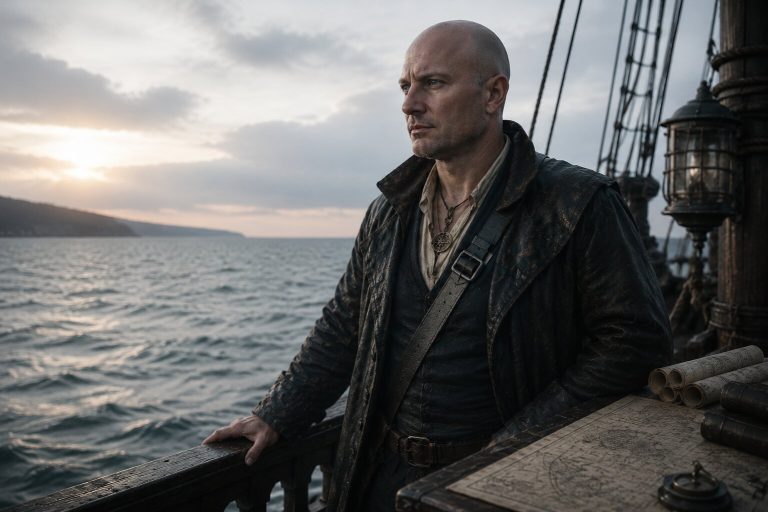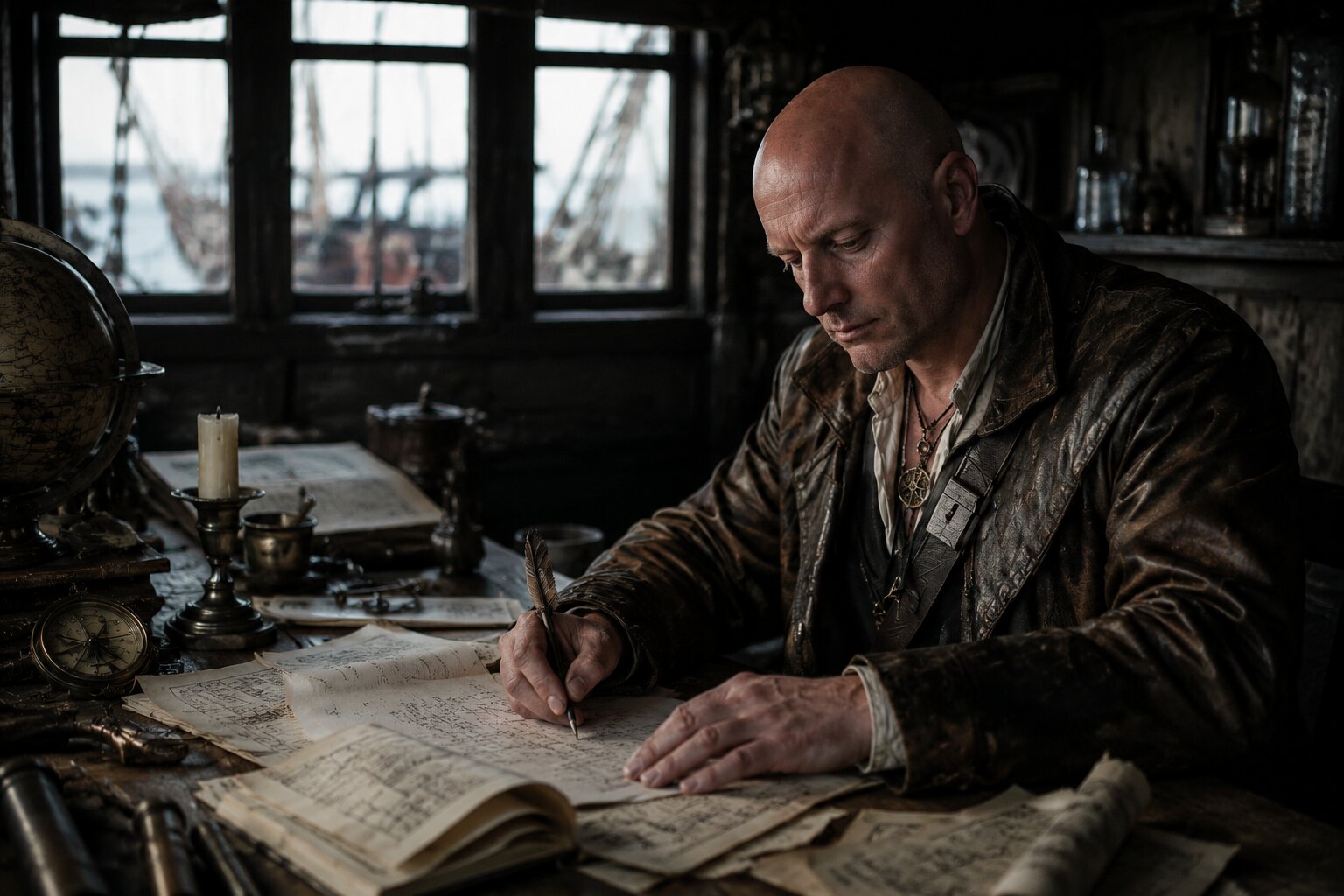

It is uncommon for me to write from the Chart Room.
Most Matters recorded aboard Treasure Bounty pass without my hand upon them. Others carry the observations forward — noting movement, absence, delay, arrival, departure, gain, loss, and return.
I keep the charts.
I mind the bearings.
I ensure we remain clear on where attention is placed, and where it is deliberately withheld.
Now that the ship sails under her present course, it is worth setting one thing down plainly.
Many arrive expecting treasure.
Some expect wrecks.
Others expect bullion, hidden cargo, lost fortunes, private ledgers, forgotten estates, vanished routes, or stories buried beneath centuries of neglect.
They are not entirely wrong.
Yet treasure alone has never interested us.
What interests us is movement.
Because nothing of consequence remains still for long.
Silver crosses oceans.
Armies cross borders.
Ships depart ports.
Families inherit estates.
Empires expand.
Companies appear.
Governments fall.
Fortunes change hands.
Routes open.
Routes close.
And somewhere within that movement, value follows.
That is the tide we observe.
On What We Observe
Treasure Bounty concerns itself with the movements that shape nations, ports, estates, routes, fortunes, and people.
We observe:
- Ships and the waters they cross.
- Ports and the power they attract.
- Estates and the families that hold them.
- Trade routes and those who control them.
- Wealth and the structures built to preserve it.
- Expeditions, discoveries, recoveries, and returns.
- Records, ledgers, correspondence, and forgotten accounts.
- The ambitions of governments, merchants, sailors, investors, and adventurers.
Some Matters begin in Plymouth.
Others begin in London, Lisbon, Cádiz, Kingston, Halifax, Cape Town, Calcutta, Sydney, or places rarely marked upon modern maps.
Wherever the tide moves, we may eventually follow.
On Certainty
We do not mistake speculation for evidence.
We do not confuse noise with signal.
We do not assume that popularity proves importance.
A sensible navigator never mistakes a chart for the sea itself.
Observations are recorded as they appear at the time.
New discoveries alter old conclusions.
Additional evidence changes direction.
That is not failure.
It is navigation.
Why This Matters
History often remembers the battle.
It frequently forgets the route that supplied it.
It remembers the fortune.
It forgets the voyage that carried it.
It remembers the empire.
It forgets the harbour that sustained it.
Treasure Bounty exists to notice those forgotten movements.
Not merely where events occurred.
But how they arrived there.
The tide speaks quietly.
The wise observer learns to read it before it turns.
— Alex Chartwright
From the Chart Room